
Successful Hybrid Work Model
A strong hybrid approach is not simply “two days at home, three days in the office.” It is a deliberately designed system that determines how people communicate, how decisions are made, and how success is measured. At the heart of this system are three pillars: technology, culture, and policy. When these elements reinforce each other, the benefits of hybrid work become clear. When they are misaligned, frustration and inefficiency quickly appear.
The Three Pillars of a Successful Hybrid Model
A durable hybrid setup rests on three interconnected foundations:
- the digital tools people use,
- the behaviors that are encouraged,
- the rules that guide everyday choices.
Technology: Building the Digital Workspace
Technology provides the environment in which hybrid work happens. If that environment is confusing or unreliable, even the most motivated teams will struggle.
A practical technology strategy for hybrid work focuses on a small number of core tools and makes their roles unmistakable:
- Primary communication hub. Select one central platform for internal conversations—typically a team‑messaging tool. Define which topics belong in which channels so that people know where to look for announcements, project discussions, and informal chat.
- Unified meeting solution. Standardize on a single video‑conferencing tool for all virtual meetings, from 1:1s to company‑wide briefings. Consistency reduces friction and makes it easier to promote shared norms, such as cameras, agendas, and recording important sessions.
- Work and knowledge management. Use one main system to track tasks and projects and a separate, clearly structured space to store documents, policies, and processes. Everyone should be able to see who is responsible for what, which work is in progress, and where to find reference material without needing side conversations.

Hybrid work also reshapes the organization’s security and hardware requirements. Multi‑factor authentication, secure access to business systems, clear rules for personal versus corporate devices, and minimum standards for home office setups become part of the basic infrastructure. When these elements are handled thoughtfully, the technology stack feels simple and predictable, enabling people to focus on their work rather than wrestling with tools.
Culture: Trust, Autonomy, and Asynchronous Communication
No matter how polished the technology, a hybrid work model will falter if the culture assumes that value is tied to physical presence. Culture determines whether hybrid work is experienced as genuine flexibility or as a confusing half‑measure.
Three cultural themes are especially important.
Trust. In a dispersed environment, leaders can’t rely on visual cues to judge effort. The focus has to shift from monitoring time to understanding results:
- Objectives are defined clearly at the individual, team, and organizational levels.
- Progress is visible through shared dashboards, updates, and documentation rather than hallway conversations.
- Feedback is based on outcomes and observable behavior, not on how often someone is seen in the office.
Managers often need new skills to operate this way—clear goal‑setting, structured check‑ins, and performance discussions rooted in evidence. Investing in these capabilities is essential for any serious hybrid strategy.
Autonomy. One of the main benefits of hybrid work is the ability for people to shape their day around when they perform best and what their lives require. That autonomy has to be balanced with the need for coordination:
- Many organizations define a limited overlap window for collaboration and leave the rest of the schedule to individual choice.
- Teams are encouraged to create working agreements that spell out expectations around response times, preferred channels, and recurring rituals such as weekly planning sessions.
- Leaders model healthy boundaries by respecting non‑working time and not treating immediate responsiveness as a sign of commitment.
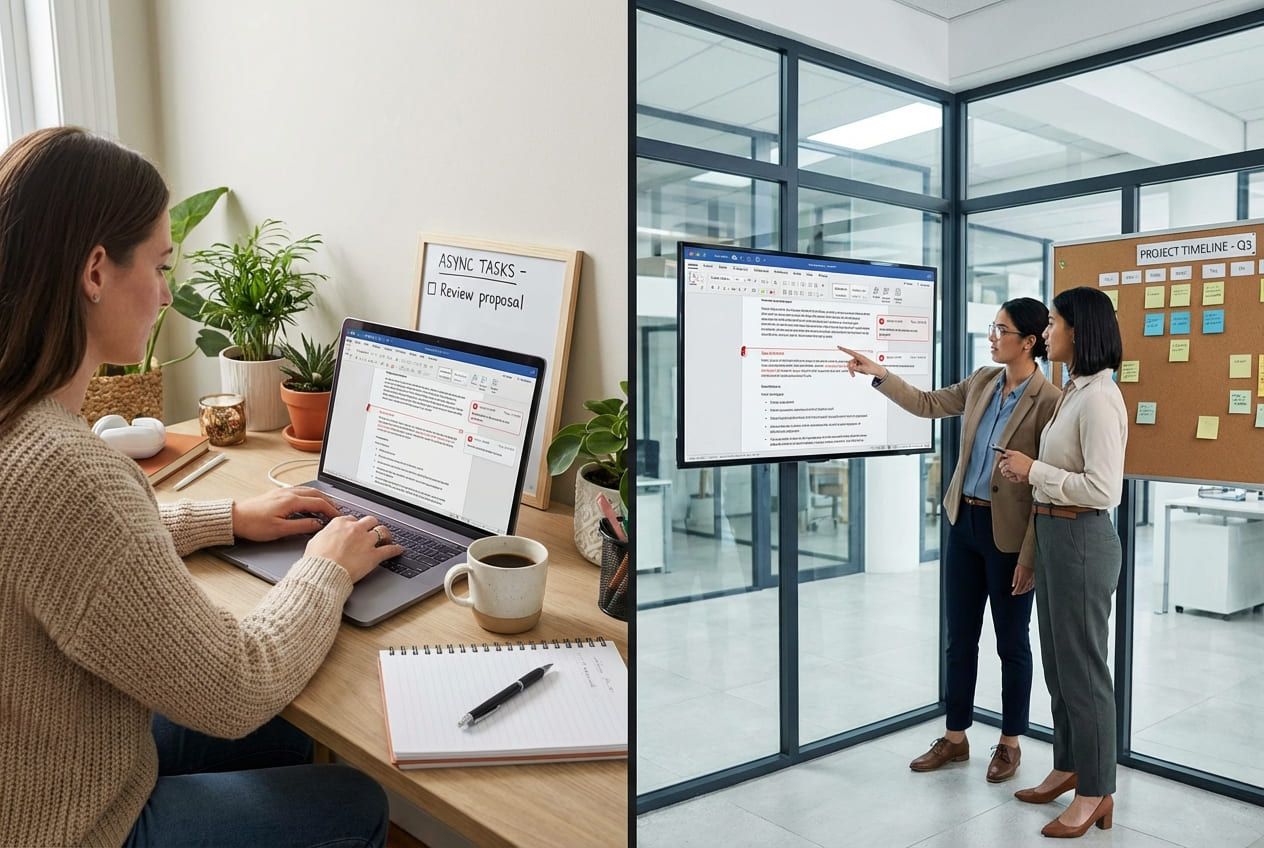
Asynchronous communication. If every decision requires a live meeting, hybrid work quickly becomes unsustainable. Asynchronous practices allow work to progress even when people are not online at the same time:
- Proposals, status reports, and decisions are drafted in writing and shared where others can comment.
- Meeting time is spent clarifying and deciding, not just transferring information that could have been read.
- Recordings and concise summaries of important meetings are stored in a shared location so that no one is dependent on being present in one specific moment.
When trust, autonomy, and asynchronous habits are embedded in daily life, hybrid work feels natural rather than forced.
Policy: Turning Intentions into Clear Rules
Culture expresses “how we do things here,” but policy answers “what is expected of me.” Without explicit policies, employees rely on guesswork, and managers improvise their own rules.
A hybrid work policy typically covers several core areas.
Attendance and location. Employees should know:
- How often, if at all, they are expected to come to the office.
- Whether in‑office days are fixed across the organization or decided by teams.
- Which roles require more on‑site presence and why.
- Any geographical limits on where they can work, especially across borders or time zones.
Working patterns and availability. Policies should describe:
- Standard working hours or at least required overlap hours for collaboration.
- Reasonable response‑time expectations for email, chat, and other channels.
- Meeting norms, such as the need for agendas, time‑boxed discussions, and regular reviews of recurring meetings.
- How employees should indicate when they are unavailable or on leave, and how responsibilities are covered.
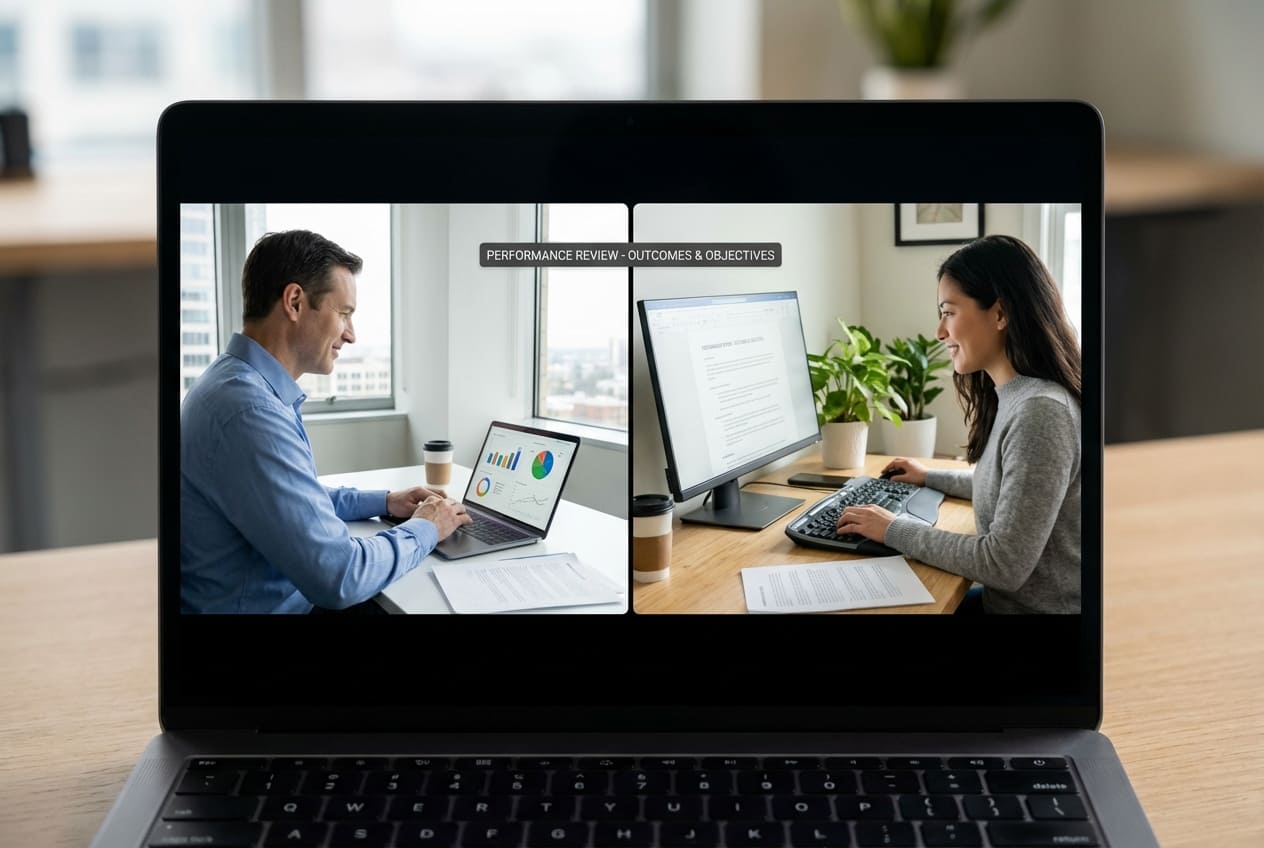
Performance and progression. To ensure fairness in a hybrid work model, organizations must make it clear that advancement is based on contribution, not location:
- Criteria for strong performance are defined for each role, with emphasis on results, collaboration, and quality.
- Access to training, mentoring, and high‑impact projects is not tied to being frequently in the office.
- Promotion and rating data are periodically reviewed to detect patterns that might indicate unintentional bias.
Support and inclusion. Hybrid arrangements affect people differently, depending on their role, personality, and home situation. Policies can recognize this by:
- Providing guidance and resources for physical and mental wellbeing.
- Offering financial or practical help for setting up a safe, functional home workspace.
- Requiring meeting practices that give remote participants equal opportunity to contribute.
When policies are clear, shared, and consistently applied, hybrid work stops feeling like a privilege granted on a case‑by‑case basis and becomes part of the organization’s operating model.
Common Pitfalls to Avoid
Even with good intentions, many organizations fall into predictable traps when they begin implementing hybrid work. Understanding these challenges makes it easier to design around them.
Proximity Bias: Overvaluing Those Who Are Seen
Proximity bias is the tendency to give more attention and better opportunities to people who are physically closer. In a hybrid context, that usually means employees who spend more time in the office.
If left unchecked, proximity bias can:
- Skew performance evaluations toward those who are seen more often.
- Concentrate informal information in the office, leaving remote colleagues out of the loop.
- Create a perception that being remote is a disadvantage, even when the official message is that all locations are equal.
Organizations can reduce this risk by redesigning everyday practices:
- Important discussions and decisions are documented and stored in shared spaces, not kept within office walls.
- Meetings are run so that remote and in‑person participants have the same access to information, for example by using shared digital agendas and chat.
- Managers are trained to base evaluations on outcomes and documented contributions, and data on ratings and promotions is periodically reviewed for patterns linked to office attendance.
By treating physical proximity as an operational variable rather than a sign of commitment, organizations preserve the fairness and credibility of their hybrid work model.
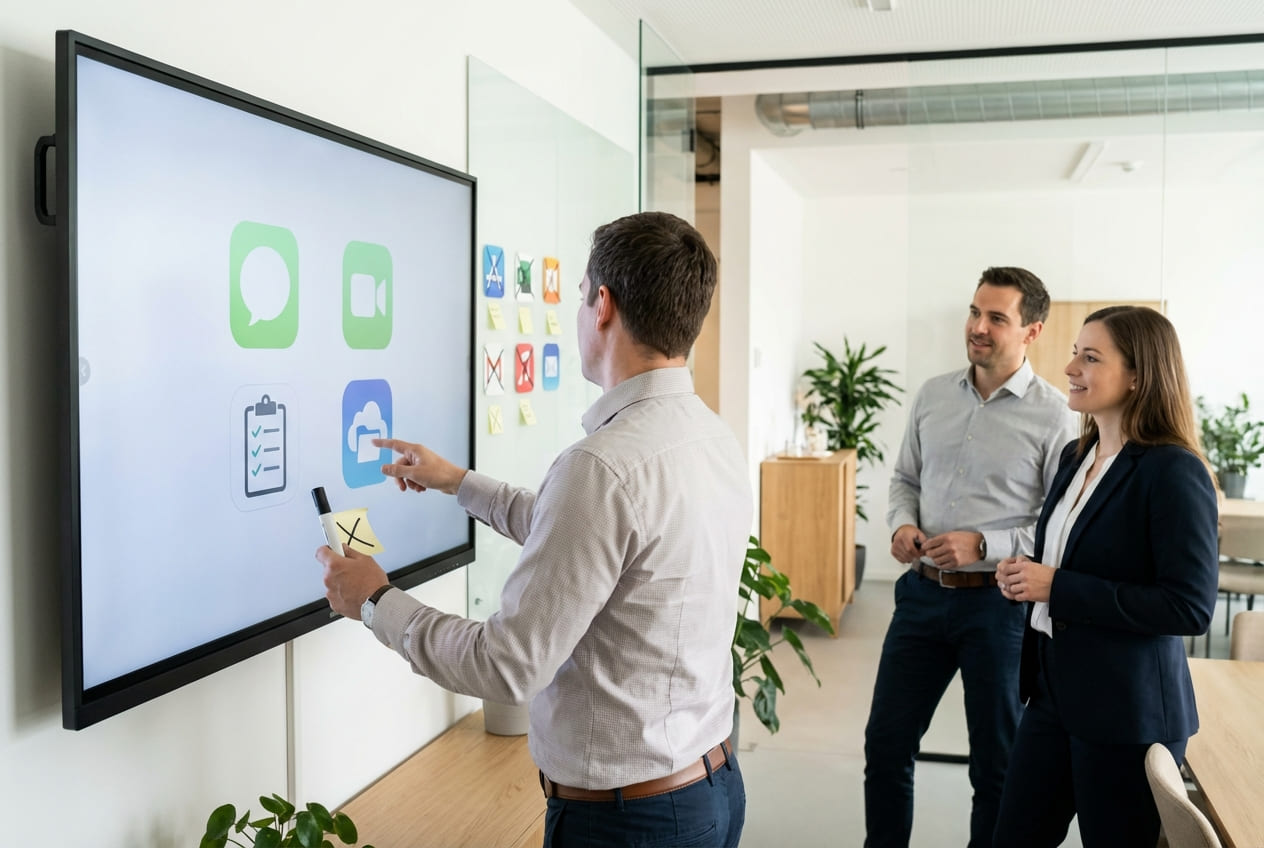
Technology Overload: Too Many Tools, Too Little Structure
Another frequent challenge of hybrid work is an overgrown toolset. In an attempt to support flexibility, organizations accumulate a patchwork of apps for messaging, project tracking, video, and files. Over time, this sprawl makes it harder—not easier—for people to do their jobs.
Signs of technology overload include:
- Employees storing similar information in several different places.
- Confusion about which channel to use for which type of communication.
- New hires spending weeks simply learning the tool landscape.
The solution is not more tools but clearer structure:
- Decide which systems are the canonical home for tasks, documents, and conversations.
- Remove or phase out tools that duplicate functionality or see little use.
- Provide simple, concrete guidance—examples of which tool to use in typical scenarios—so that people can form stable habits.
When the digital environment is curated, hybrid work becomes smoother: less context‑switching, faster onboarding, and a lower risk of important information being lost.
Lack of Flexibility: Old Habits in a New Format
Some organizations adopt a hybrid label but keep most of their traditional routines: fixed office days for everyone, dense schedules of real‑time meetings, and an expectation of near‑instant replies. In practice, these arrangements offer little additional flexibility while adding logistical complexity.
A more human‑centered approach recognizes flexibility as a design goal in its own right:
- Where possible, teams decide together which activities require physical presence and which do not.
- Leaders encourage focusing on deep work as much as on collaboration, protecting blocks of uninterrupted time.
- The hybrid setup is reviewed regularly using feedback from employees and data on engagement, performance, and retention, and then adjusted rather than treated as permanent.
When flexibility is genuine and thoughtfully structured, hybrid work helps employees balance their responsibilities while still meeting organizational objectives.

Conclusion: Hybrid Work as a Deliberate System
Hybrid work is now a core feature of how many organizations operate, not a temporary experiment. To make it successful, leaders and HR specialists need to approach it as a deliberate system built on three pillars:
- Technology that is purposeful, secure, and easy to navigate.
- Culture that values trust, autonomy, and the ability to collaborate without always being in the same place.
- Policy that translates intentions into clear expectations about attendance, availability, performance, and support.
At the same time, they must remain alert to the main challenges of hybrid work: proximity bias that favors those in the office, tool overload that fragments communication, and rigid practices that undermine flexibility.
Organizations that continuously refine their hybrid work model—treating it as an evolving way of operating rather than a one‑time decision—will be better equipped to attract and retain talent, adapt to change, and sustain performance in the years ahead.
When you’re designing or participating in a hybrid work model, it’s also worth looking at the broader context of remote careers and relocation. If you’re exploring new opportunities, our guide on 63 Common Mistakes When Searching for Remote Jobs (And How to Avoid Them) will help you navigate the remote job market more confidently. To better understand your long‑term options, we also break down the key differences between remote work and freelancing, so you can choose the model that fits your goals and lifestyle. And if your hybrid or remote setup gives you geographical freedom, don’t miss our detailed framework on how to choose a country for relocation while working remotely.