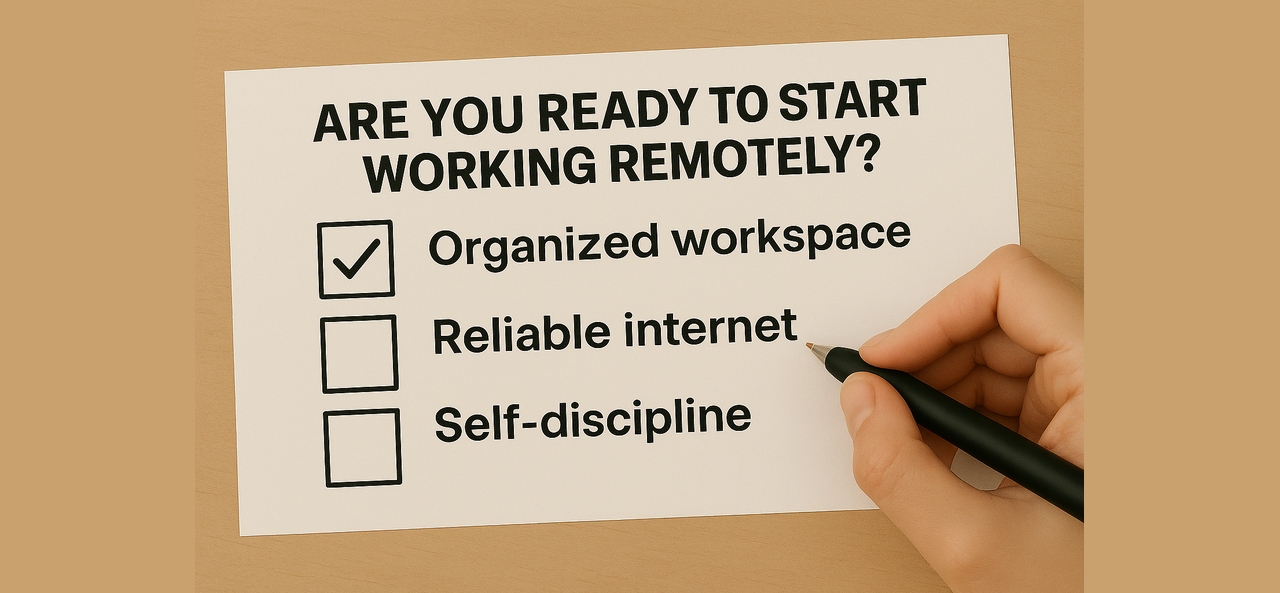
Remote work isn’t just a trend — it’s a lifestyle shift. It offers flexibility, independence, and some freedom, but it also demands self-discipline, clarity, and a structured approach to work-life boundaries. If you’re considering switching to remote work or have been offered a remote role, it’s crucial to ask: Is this truly right for me?
Here’s a practical and honest self-assessment to help you gauge your readiness for remote work — both mentally and organizationally.
For each of the six categories below, check only the statements that are true for you. Then count the total score and read the verdict at the end of this article.
1. Assess Your Self-Discipline and Motivation
Remote work = fewer external motivators. There’s no boss or co-workers nearby, no people that can actually see you working the whole day. Are you able to stay on task without direct supervision or pressure?
Checklist:
I start my workday in time without anybody controlling me
I regularly set (and meet) deadlines on my own
I can work through distractions or push past moments of low motivation
🟢Self-organized people can easier adapt to changing work conditions, including remote work.
🔴Poor self-discipline may make you need strategies or tools (like accountability partners or productivity timers).
There are two important notes here:
- Strict timelines and self-discipline only matter if they were important in your office environment. If you work in a creative, passion-driven atmosphere where there are no strict schedules and deadlines, you likely won’t face those same demands in a remote setting either.
- If you felt unmotivated in your job for a long time, it may be worth exploring the root cause rather than simply switching to remote work.
2. Evaluate Your Communication Skills
Remote work thrives on clear, consistent communication — often written. You’ll spend less time in live meetings and more time using tools like Slack, Zoom, or email.
Checklist:
I am comfortable communicating via email, chat, or video calls
I can express myself clearly without relying on face-to-face interaction
I ask for clarification when needed without hesitation.
🟢 Strong communication = better collaboration and fewer misunderstandings.
🔴 Poor communication = isolation, confusion, and missed opportunities.
3. Check Your Organizational Habits
Remote work puts the responsibility for organizing your time, space, and projects squarely on your shoulders.
Checklist:
I use calendars, task managers, or to-do lists effectively.
I can prioritize without needing daily check-ins.
My digital workspace (files, emails, tools) is easy to navigate.
🟢 Well-organized workers adapt quicker to remote demands.
🔴 Disorganized tendencies may lead to missed deadlines or burnout, even without remote work context.
4. Examine Your Home Environment
The space you work from can significantly impact your focus and well-being.
Checklist:
I have a quiet, dedicated area to work from.
There are no frequent distractions (family, noise, clutter).
My tech setup is reliable (Wi-Fi, computer, webcam, etc.)
🟢 A designated workspace helps create a mental boundary between “home” and “work.”
🔴 If your environment is chaotic or poorly equipped, you’ll face daily disappointment.
5. Reflect on Your Need for Social Interaction
One of the biggest shocks for new remote workers is loneliness. No watercooler chats or spontaneous lunch outings.
Checklist:
I prefer working independently rather than close to others in the same space.
I don’t need to maintain relationships with colleagues outside of regular working interactions.
I can make an effort to keep in touch with others, even when we’re not in the same place.
🟢 Introverts and independent workers often flourish remotely.
🔴 Extroverts can still succeed — but may need to build in social routines intentionally.
6. Assess Your Mental and Emotional Readiness
Remote work can blur the lines between work and life. Without clear boundaries, burnout is a real risk.
Checklist:
I can “log off” at a set time each day.
I have routines to support mental health and balance (such as regular sport activities and hobbies).
I manage stress on my own quite well.
🟢 Mentally strong remote workers set clear boundaries and know when to pause.
🔴 If you’re prone to overworking or isolation, consider building support systems first.
Time to face the truth: Your Remote Work Readiness Scorecard
Total Score of checked statements:
- 15–18: You’re highly ready for remote work.
- 10–14: You’re somewhat ready — identify key areas for growth.
- Below 10: Remote work may be challenging now, but with the right strategies, it’s possible to improve your readiness.
Final Tip: Try Before You Leap
If you’re unsure, consider a trial period — even just a few days working remotely can reveal a lot. Pay attention to your energy levels, productivity, and emotional responses. With honest self-reflection and the right adjustments, remote work can be both rewarding and sustainable.
Some companies offer a hybrid work mode: 2-3 days a week of remote work, the rest of the week - from the office. It can be also a solution for those who seek more independence or freedom in the schedule, but don’t find fully remote options suitable for them.
Ready or not, remote work isn’t just about where you work — it’s about how you work, and it starts with honest conversation with yourself.